Artificial intelligence is becoming part of education, but effective AI learning requires more than simply asking a chatbot for an answer.
OpenAI’s August 4, 2026 education announcement introduced new plugins for K–12 teachers, college educators and college students using ChatGPT Work and Codex. The tools are designed to work with course materials and context selected by users.
OpenAI describes this shift as moving beyond simple question answering toward AI systems that can reason across context, use tools and support more complex, multi-step work.
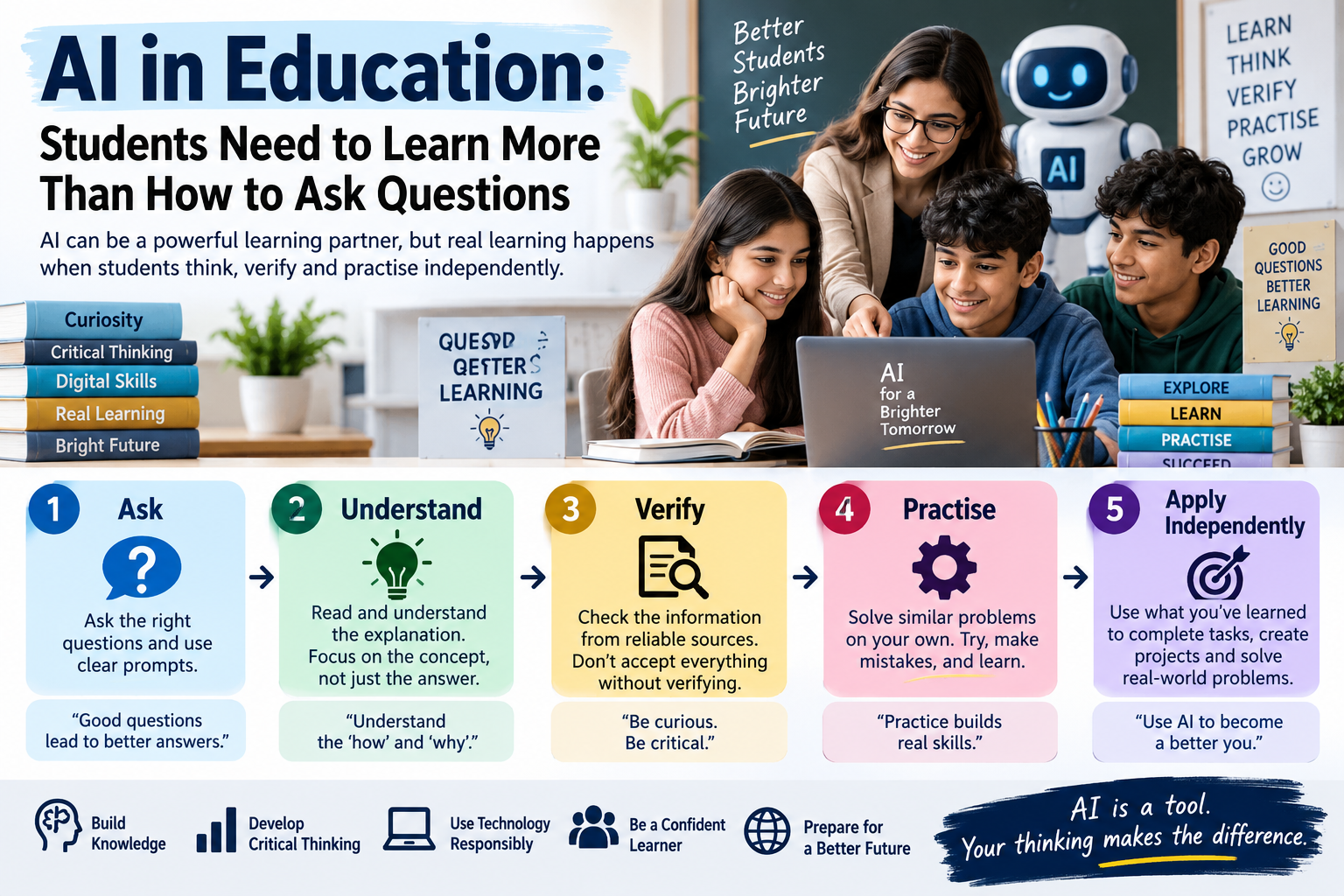
This creates an important opportunity for computer education. Students should learn not only how to write a prompt, but also how to check information, understand concepts and practise independently.
A useful learning process is:
Ask → Understand → Verify → Practise
For example, instead of asking AI to solve a mathematics problem and copying the answer, a student can ask for an explanation of the method. The student can then solve a similar problem independently and compare the result.
AI can also help students summarize difficult material, create practice questions, brainstorm project ideas, improve writing and explore unfamiliar concepts. However, AI-generated information still needs to be checked.
Teachers can similarly use AI to support lesson preparation, educational resources and other repetitive tasks. OpenAI says its education work is designed to help educators and students build skills and confidence while using AI responsibly.
The goal of AI education should therefore not be to make students dependent on AI. It should help them become better thinkers and more capable technology users.
A student who can use AI, verify AI and then perform the task independently has developed a much stronger digital skill than someone who simply copies an AI response.