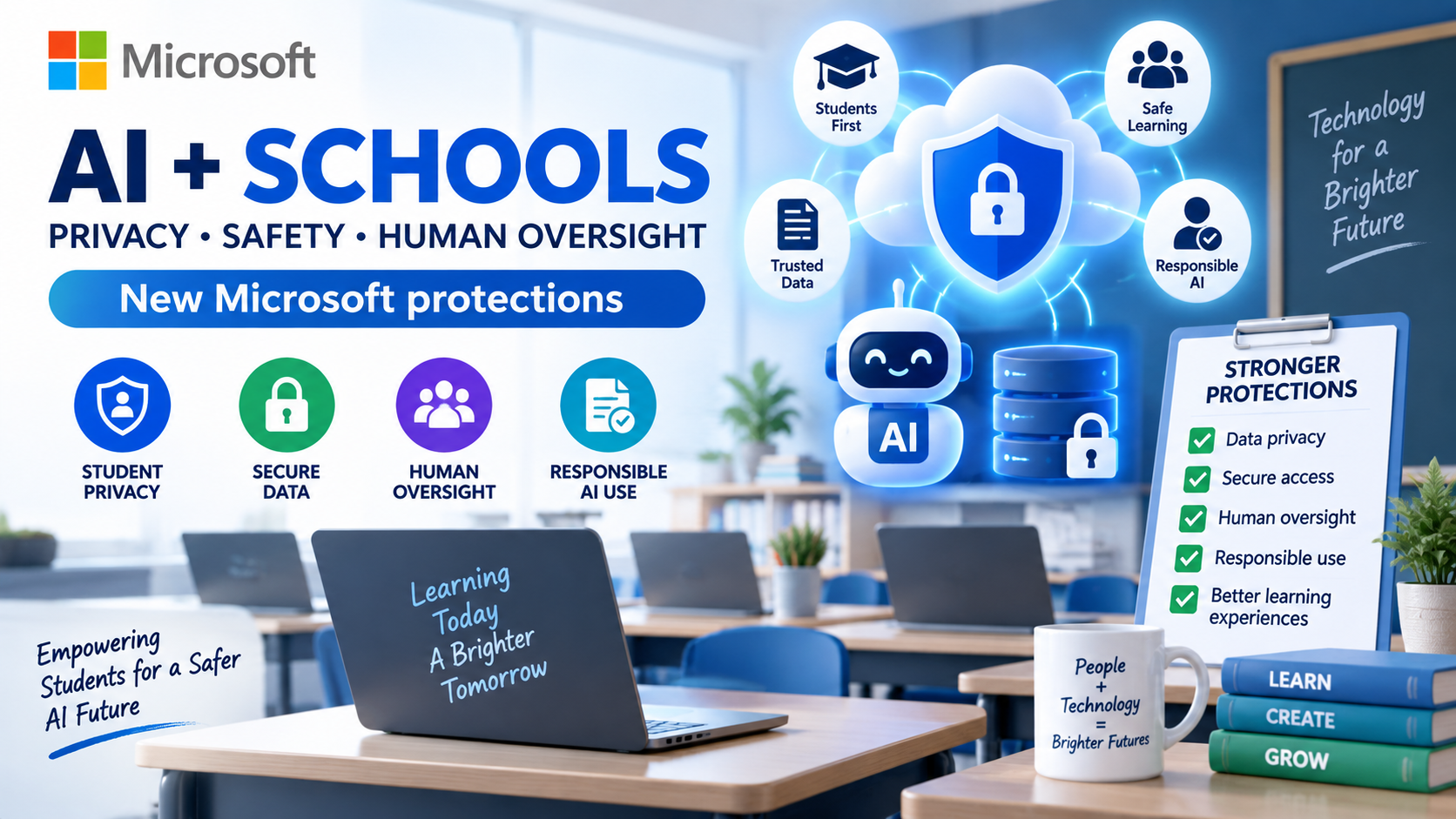
Microsoft has agreed to new privacy and oversight standards for AI used in schools, according to an Education Week report published September 9, 2026. The agreement was made through a 30-page memorandum involving the American Federation of Teachers and related education organizations.
The standards are designed to give schools greater control over how student and educator data is handled when AI tools are used.
Under the agreement, covered data would not be used to train or improve AI models except for specified safety-related purposes. The standards also call for stronger encryption and access controls, independent security testing, limits on unnecessary data collection and greater customer control over retention, export and deletion.
The agreement also addresses more sensitive AI capabilities. Tools involving biometrics, profiling, memory or tracking would require additional review. AI “companions” designed to simulate human relationships and provide continuous social or emotional support to students would be prohibited under the standards.
An important detail is that these protections will not automatically apply to every school contract. Education Week reports that districts can request the new language for new or existing Microsoft agreements beginning November 1, 2026.
Why does this matter?
Schools increasingly use AI for lesson preparation, learning support, communication and other educational tasks. That creates a need to think about not only what AI can do, but also what information it receives and how that information is protected.
For teachers, this means checking school policies before uploading student work, personal information or sensitive classroom records to AI systems.
For students, digital literacy should include privacy awareness. A useful rule is simple: do not put sensitive information into an AI tool unless you understand the school’s approved policy and the tool’s data practices.
The debate around AI in education is therefore moving beyond access. Privacy, security, transparency and human oversight are becoming equally important parts of responsible technology education.